First published 8 September 2020 · revised and expanded 30 October 2026.
Ten minutes, about fifty cents, one skillet, and all six tastes of Āyurveda on a single plate.
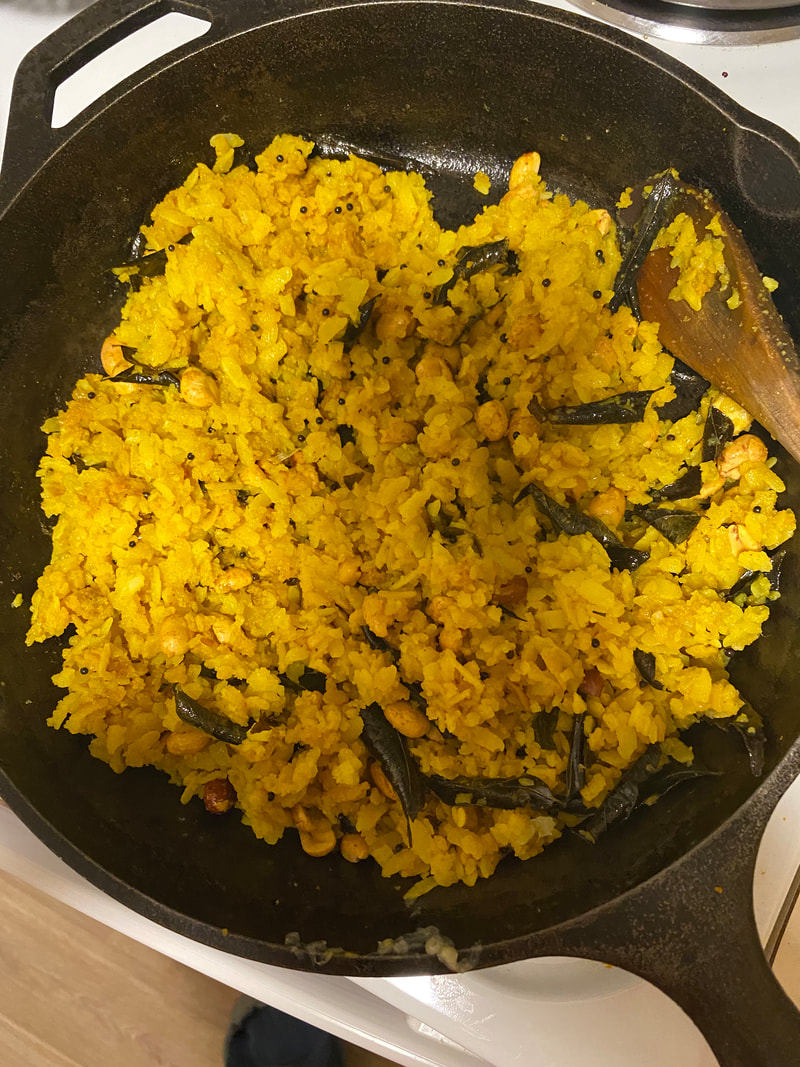
Here is an easy way to make a wonderful, nutritious, and delicious Ayurvedic meal in under 10 minutes start to finish, at about 50 cents per serving. It can serve as a breakfast, snack, or light lunch or dinner.
Poha is flattened rice: grains pressed into thin flakes, so that a few minutes in hot water makes them tender. The method is old. Vāgbhaṭa’s commentator Aruṇadatta describes pṛthuka as “green grains, husked, roasted, and pounded with a pestle,” and the dish built on it is one of India’s best-loved breakfasts.
What makes it more than a quick breakfast is its balance. All six of Āyurveda’s tastes are in the pan, and the method, spices bloomed in hot ghee before the rice goes in, is one the classical texts help explain. The recipe comes first. The why follows it, for anyone who wants it.
- Time
- 10 minutes, start to finish
- Cost
- about 50¢ a serving (2020 prices)
- Serve as
- breakfast, snack, or a light meal
- Tastes
- all six
What you need
-
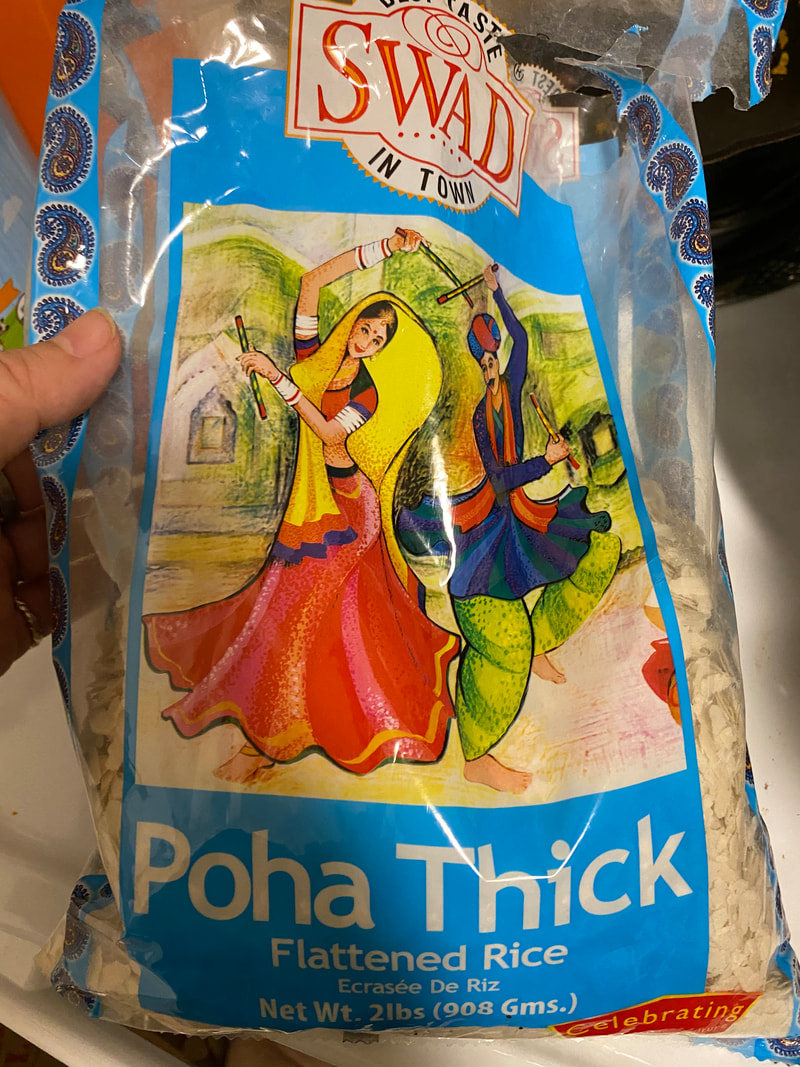
1 cup
Poha pṛthuka
Flattened rice, from Indian grocers or online. The thick kind holds its shape.
Sweet Āyurveda ↓ -
-
-
-
-
-
-
-
optional
Pomegranate seeds dāḍima
Stirred in at the end, if you like.
SweetSourAstringent Āyurveda ↓
Method
-
1 Soak the poha
Soak the poha in a pot or bowl of hot water for five or so minutes. Transfer it to a colander to drain.
Tip. Soaking suits thick poha; thin poha wants only a quick rinse. While the poha drains, start the tarka. That overlap is how the whole dish fits in ten minutes.
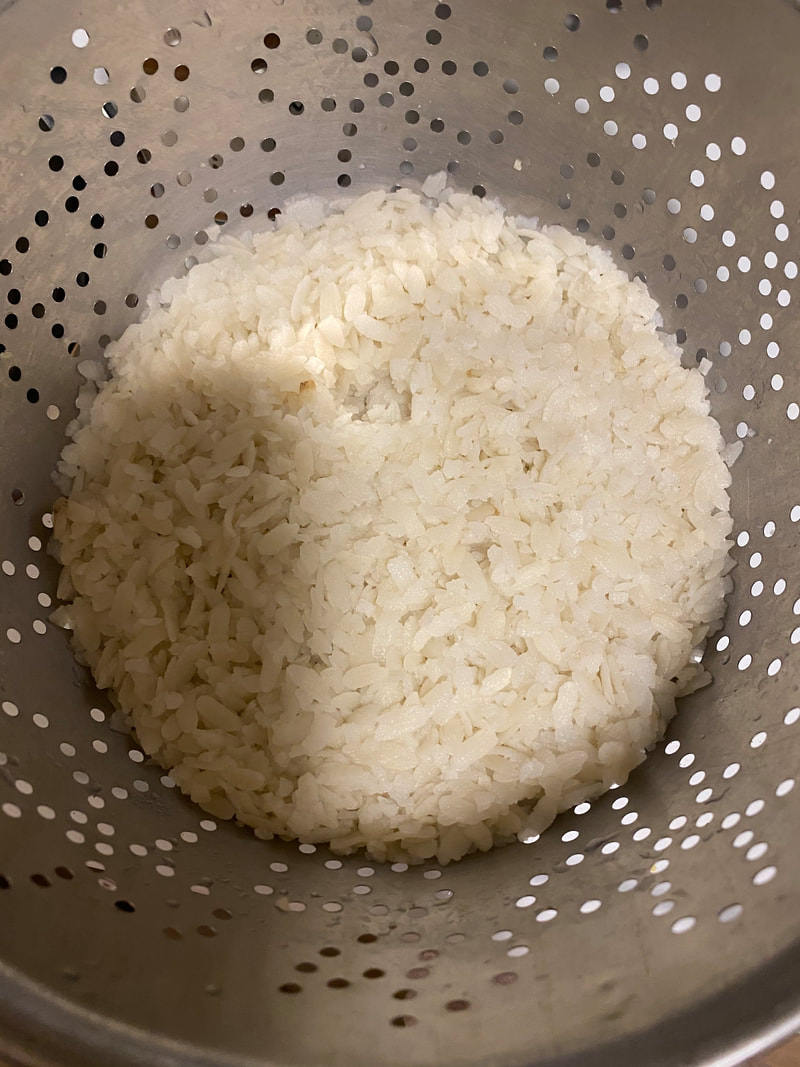
Soaked and drained. -
2 Start the tarka
Tarka is a term for spices in hot ghee. It is believed that the hot ghee emancipates the higher properties of the spices. Vāgbhaṭa explains why ghee is the right carrier ↓
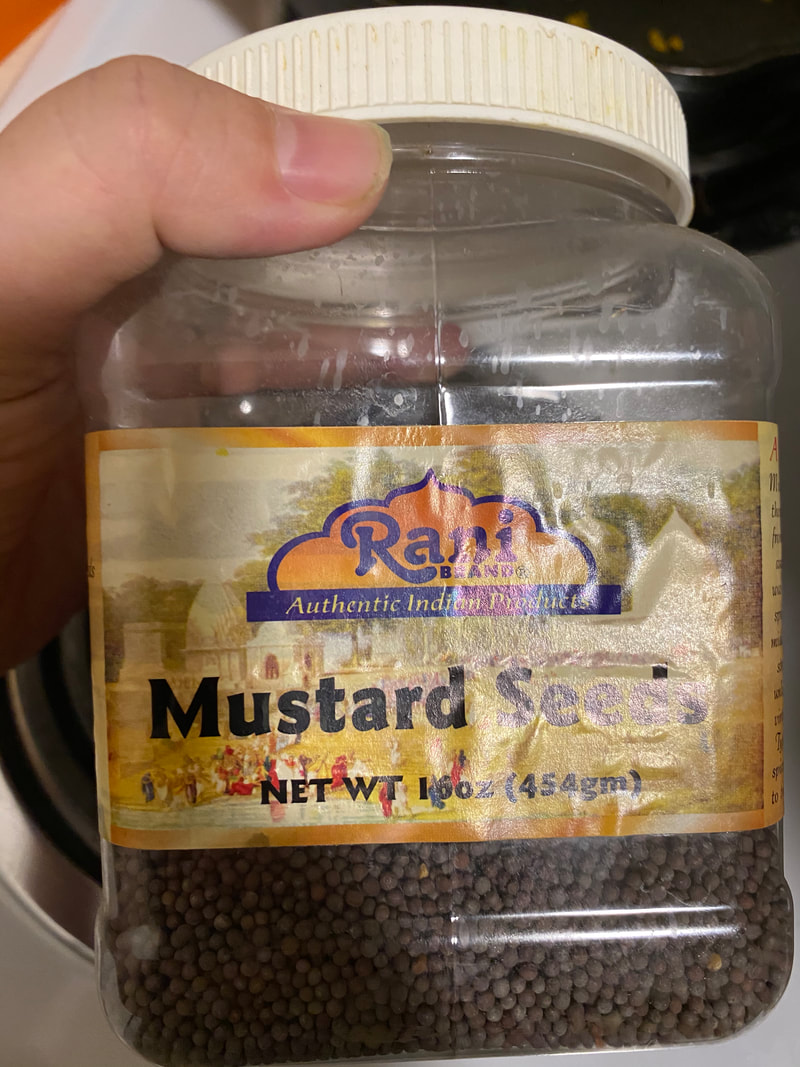
Put ghee in the skillet. Put it on medium heat until melted. Add the mustard seeds.
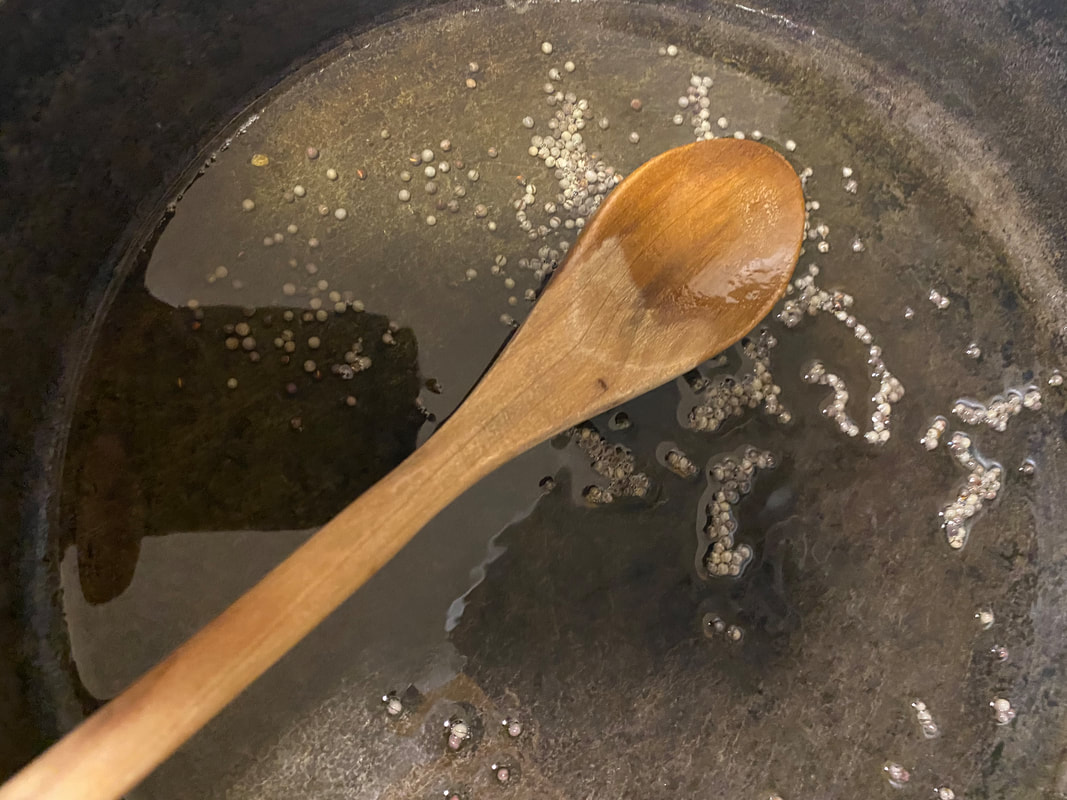
Mustard seeds in melted ghee. In a moment they begin to pop. Reduce the heat to medium-low. Listen for the popping sounds of the seeds. A delightful flowery fragrance should be released.
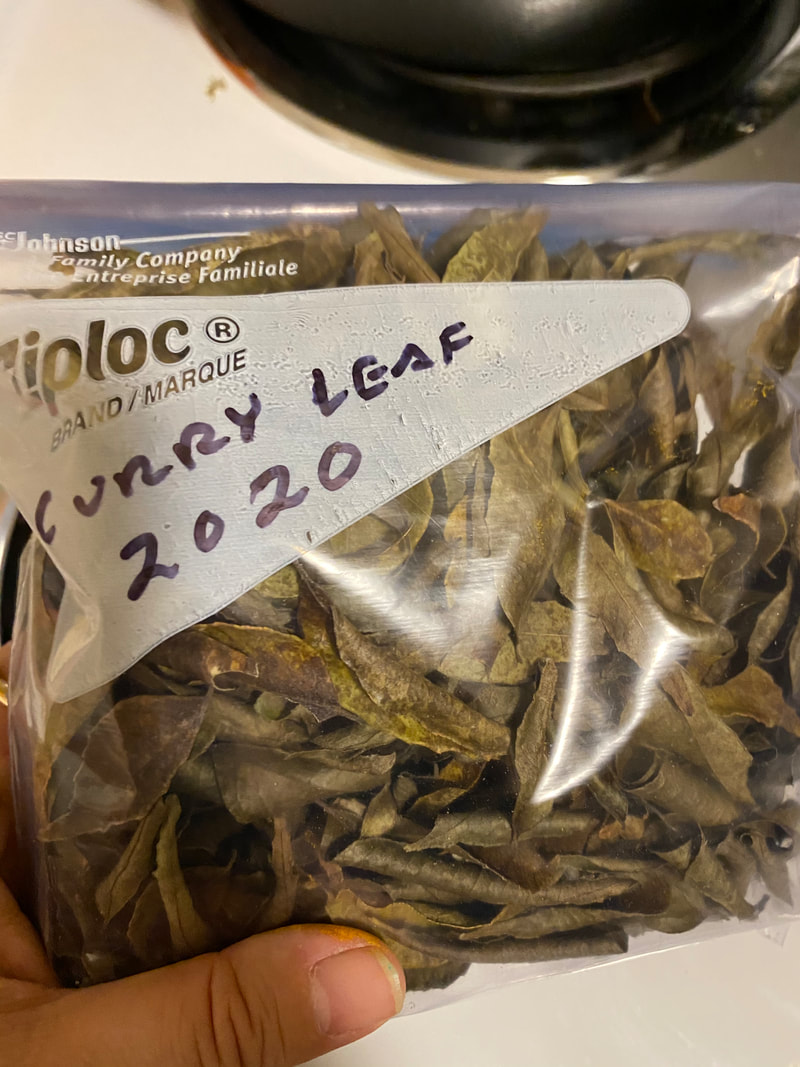
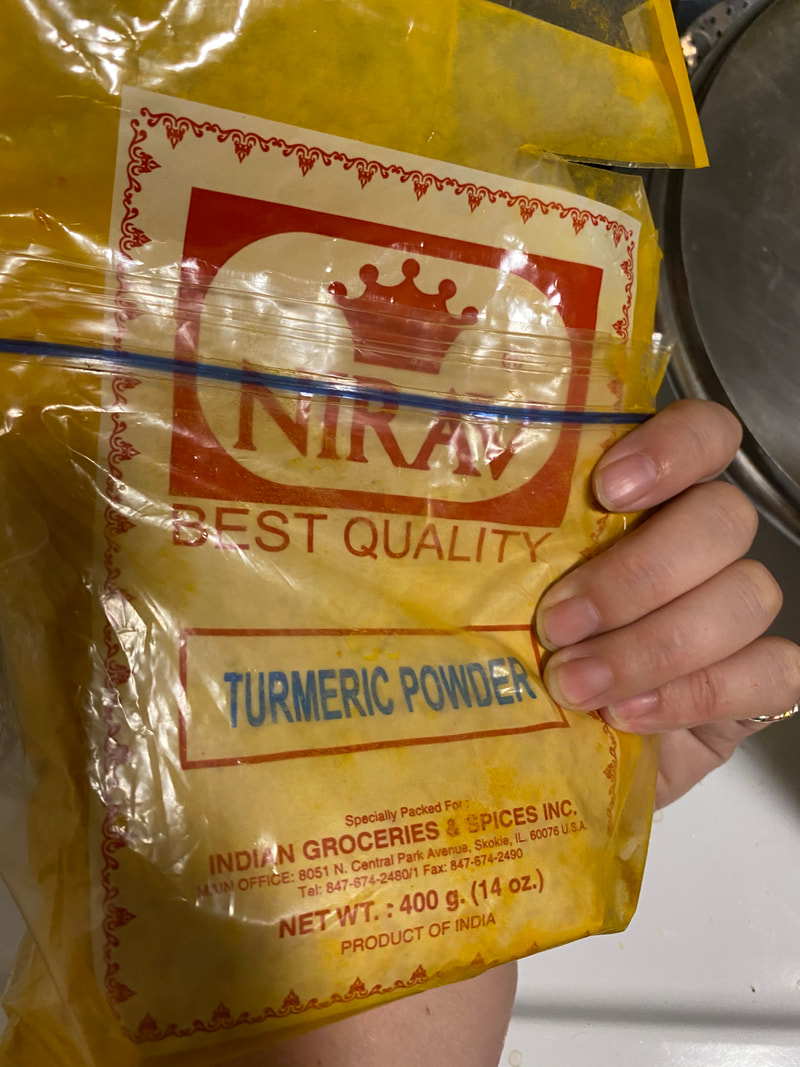
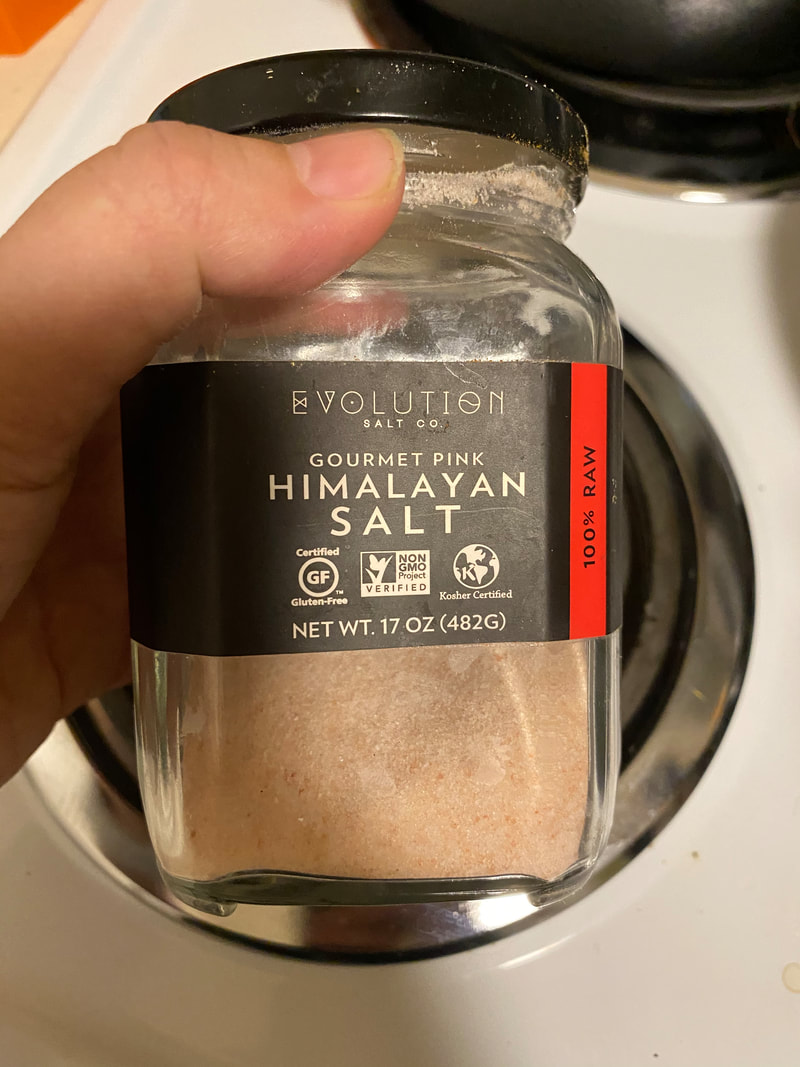
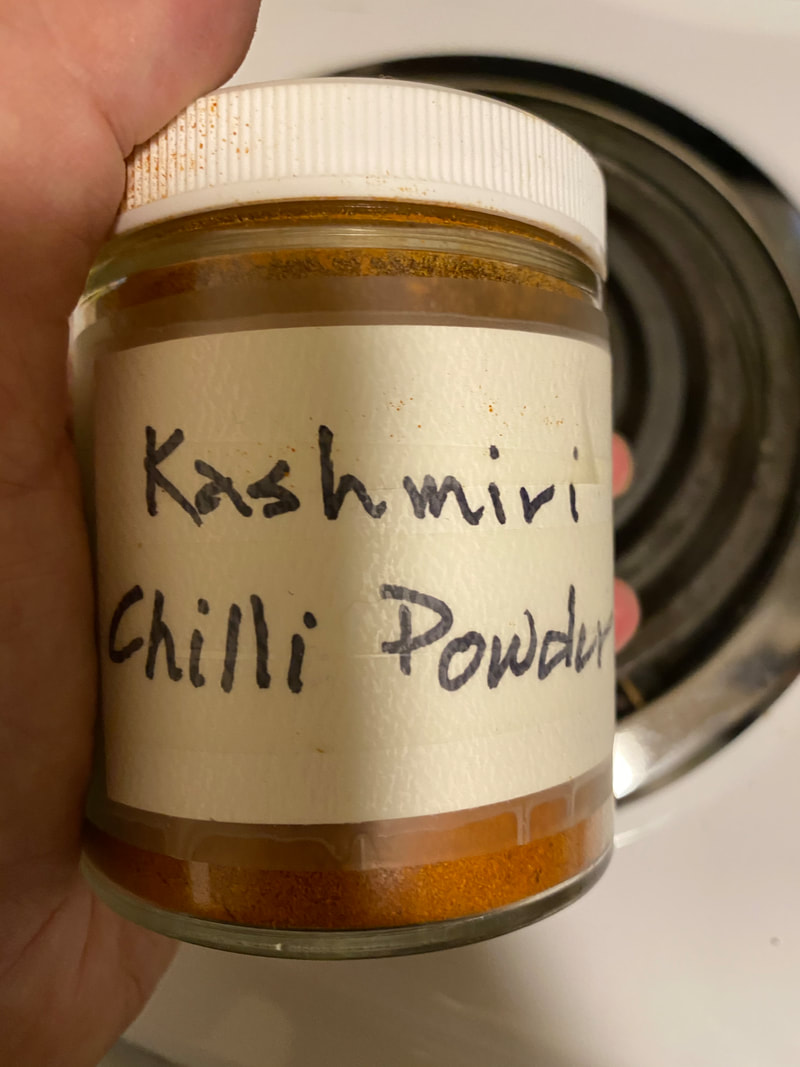
Reduce the heat to low. Only now, add the curry leaves and stir. Add the chili powder, turmeric, and salt. Stir. Powdered spices scorch quickly in hot ghee, which is why the heat comes down before they go in.
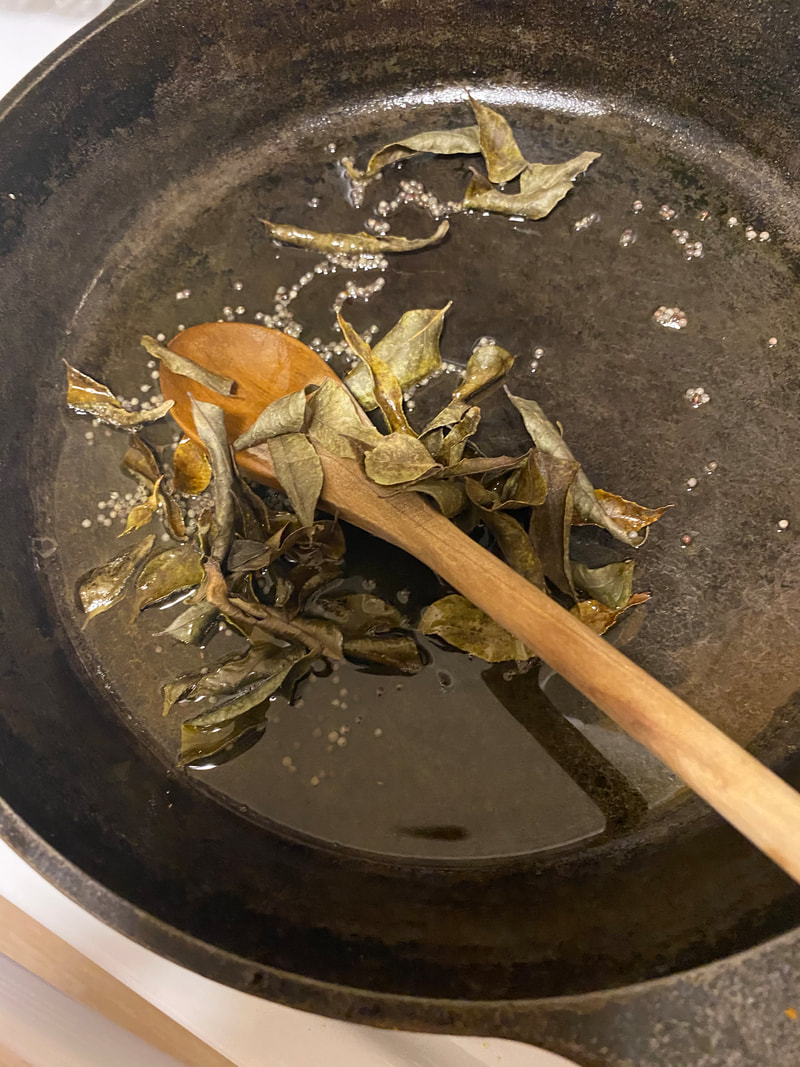
a Curry leaves, once the heat is low 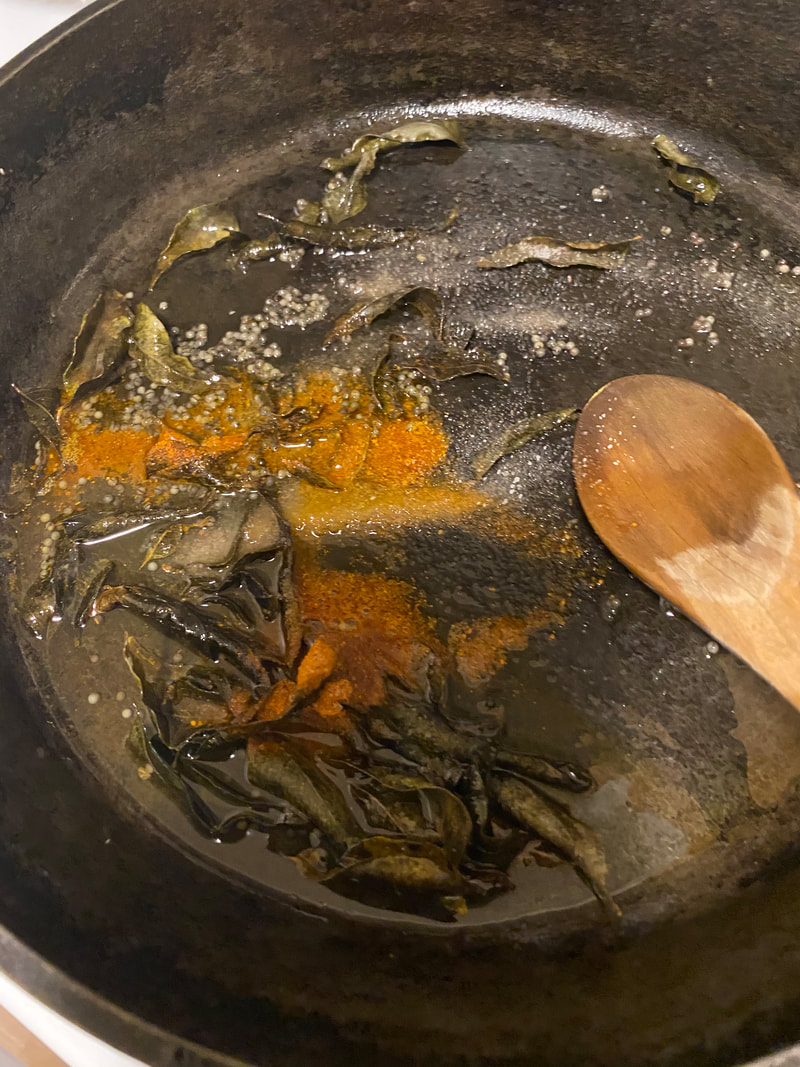
b Chili powder 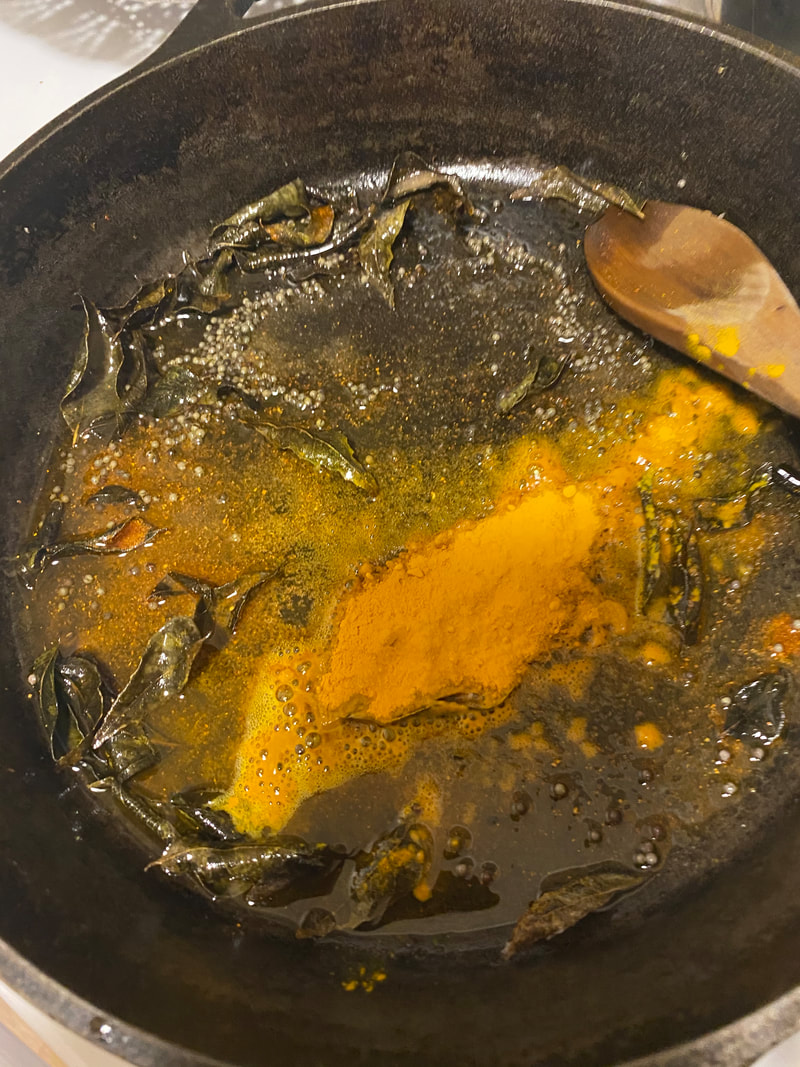
c Turmeric 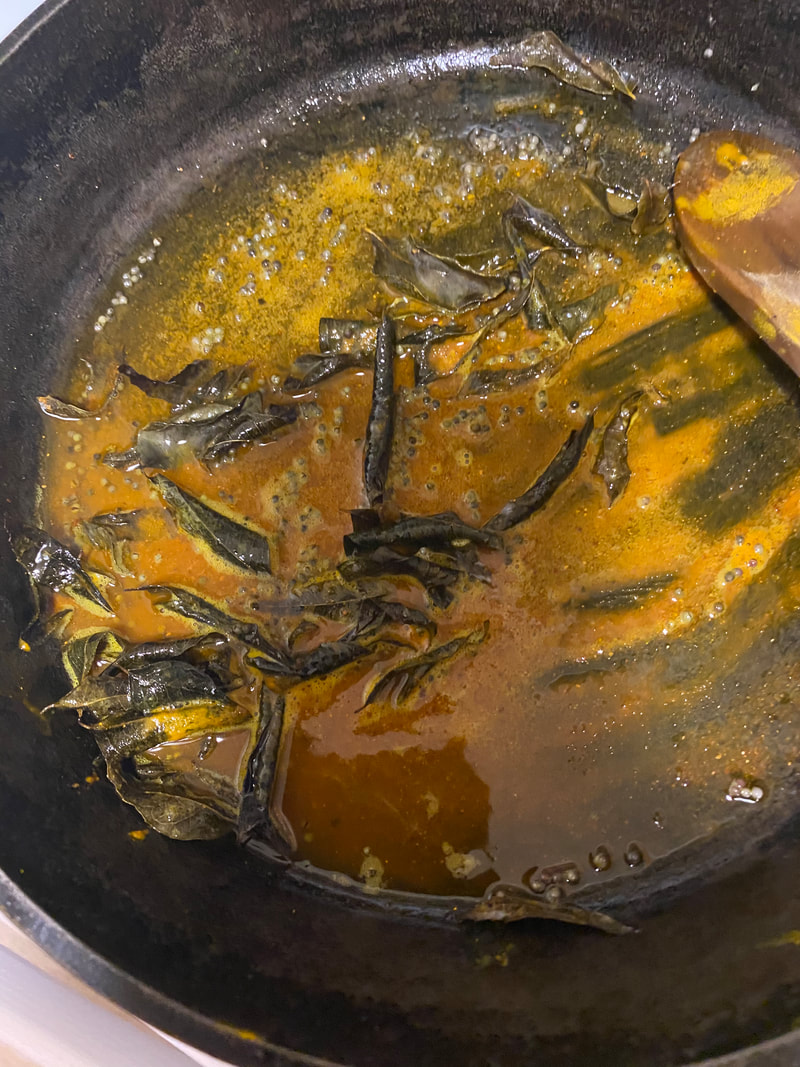
d Salt, a stir, and the tarka is ready -
3 Add the peanuts
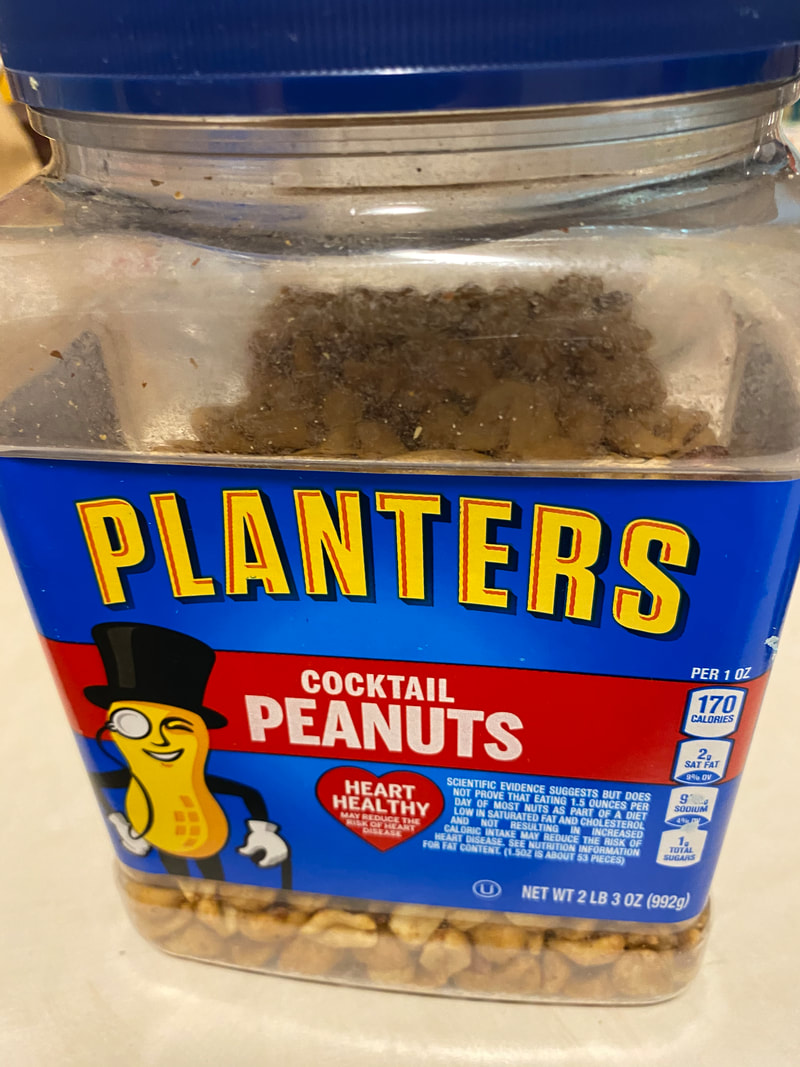
Add the peanuts and stir. Let sit for 2 minutes. Stir again.
-
4 Add the poha
Add the drained poha and stir, evenly distributing the color. Optionally, pomegranate seeds can be added. Serve.
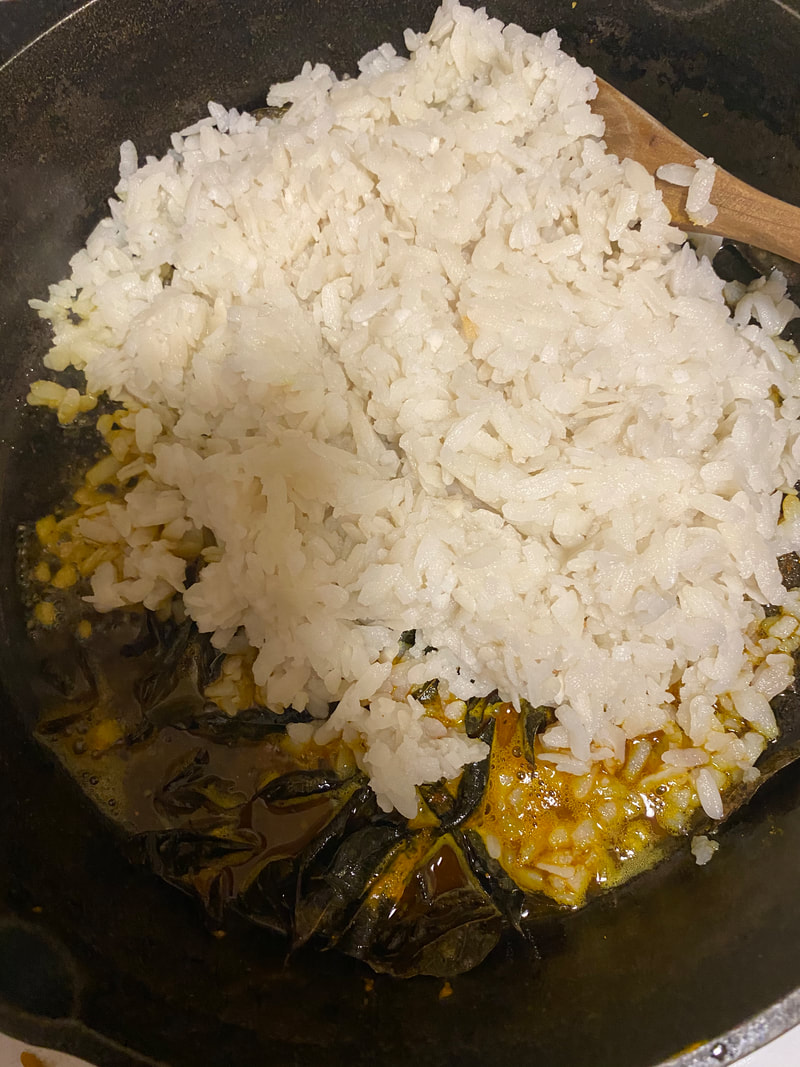
The poha goes in white… 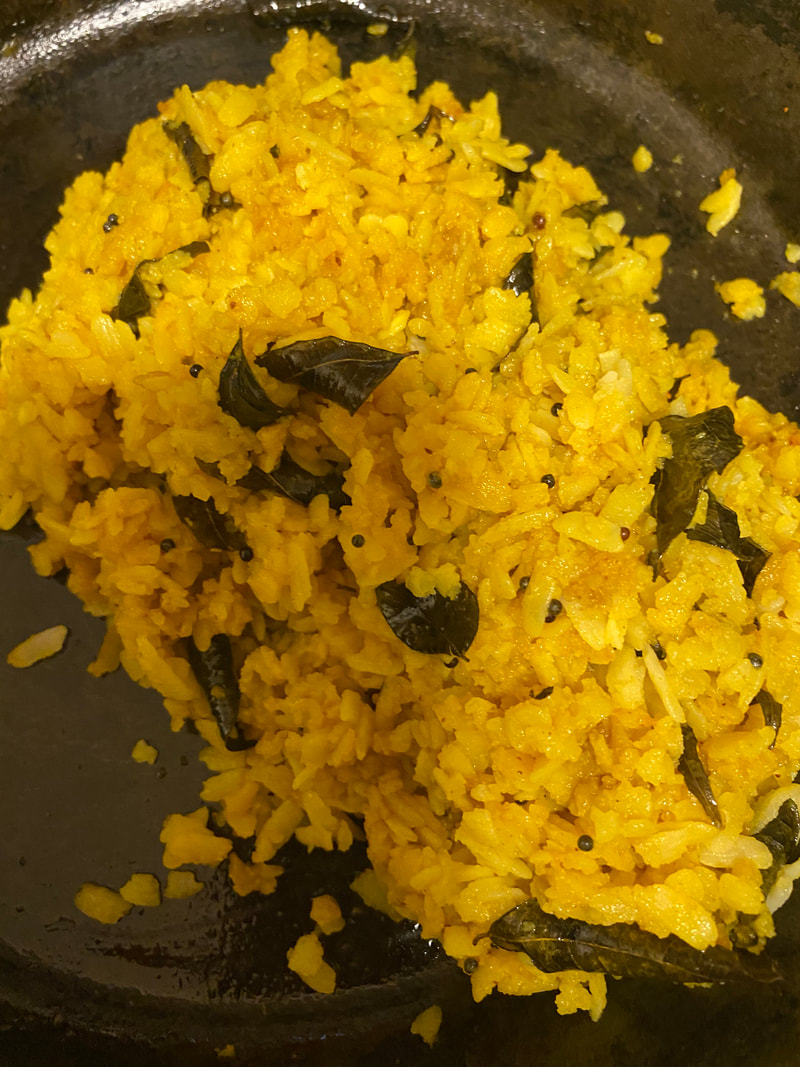
…and is stirred until every flake is gold. -
5 Finish with lime
Add squeezed lime to the plated poha.
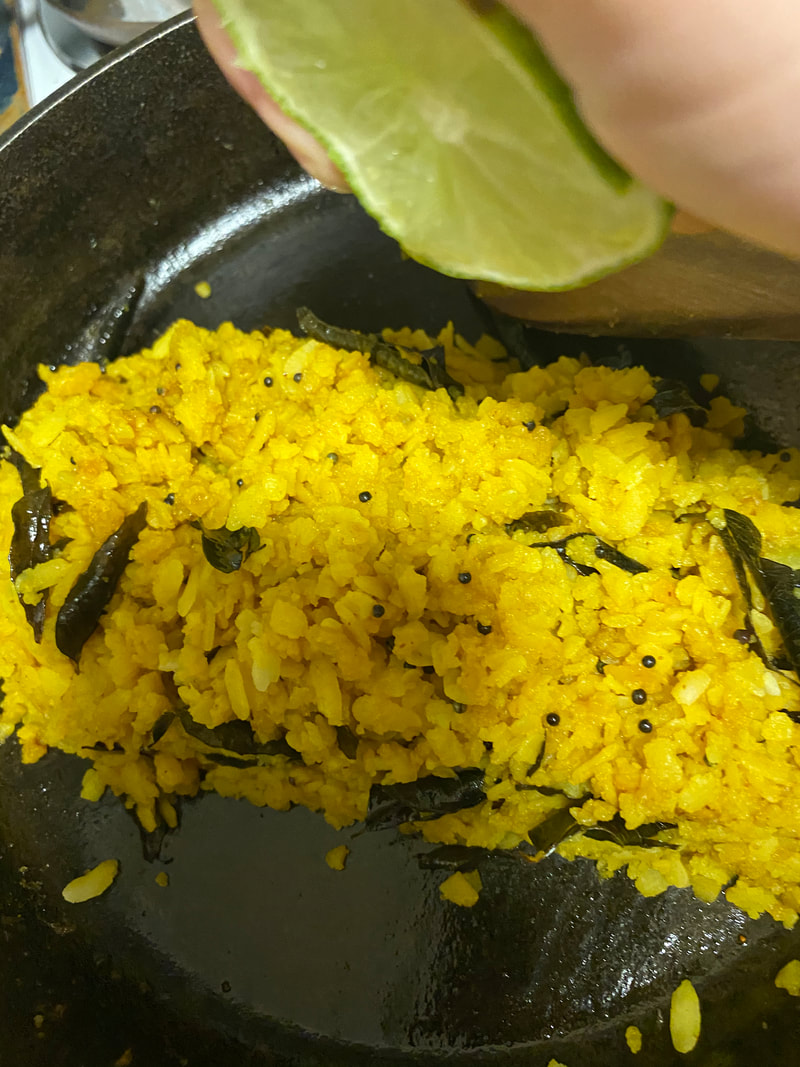
Fresh lime, last of all.
That’s it!
All six tastes in one skillet
Āyurveda counts six tastes, or rasas. Vāgbhaṭa builds each from two of the five elements and gives each its own work in the body (Sū. 10.1–22). This little dish holds all six:
-
Madhura
Sweet
earth + water
In the pan: poha, ghee, pomegranate
“greatly strengthens the dhātus … prolongs life, sustains life” (Sū. 10.7–8)
-
Amla
Sour
earth + fire
In the pan: lime, pomegranate
“stimulates digestive fire … beneficial for the heart, aids digestion, and promotes appetite” (Sū. 10.10)
-
Lavaṇa
Salty
water + fire
In the pan: salt
“stimulates the digestive fire … appetizing” (Sū. 10.12–13)
-
Kaṭu
Pungent
fire + air
In the pan: chili powder, mustard seeds
“a digestive stimulant, a digester, an appetizer … opens channels, and removes kapha” (Sū. 10.18)
-
Tikta
Bitter
space + air
In the pan: curry leaves, turmeric
“though itself unappetizing, overcomes anorexia … light, intellect-promoting” (Sū. 10.14–16)
-
Kaṣāya
Astringent
earth + air
In the pan: curry leaves, peanuts, pomegranate
“alleviates pitta and kapha … greatly clarifies the skin” (Sū. 10.20–21)
Vāgbhaṭa enjoys the arithmetic. He counts sixty-three varieties of taste: the six alone, and fifty-seven combinations: fifteen pairs, twenty threes, fifteen fours, six fives, and one in which “one substance has all six tastes” (Sū. 10.39–43). Stirred together in one pan, this poha reaches for that last one.
The Āyurveda of the plate
What the classical texts say about each ingredient, quoted from my translation of Vāgbhaṭa’s Aṣṭāṅgahṛdayam, with his commentators Aruṇadatta and Hemādri where they add something.1
Poha · pṛthuka
Flattened rice (pṛthukā) is heavy, strengthening, and causes kapha and constipation.
Aṣṭāṅgahṛdayam, Sū. 6.37
Aruṇadatta’s gloss is the recipe for making it: “Green grains, husked, roasted, and pounded with a pestle, are called pṛthukā or cipiṭa.” Hemādri adds that they are “the roasted grains of un-dried rice,” and that matters: among rices, Vāgbhaṭa excuses only old śāli from the kapha that sweet foods bring (Sū. 10.33). Its lighter cousin is lājā, parched rice, which he calls “digestive stimulants, light, and cold in potency” (Sū. 6.36–37).
That is the logic of the whole dish. Poha is a sweet, strengthening, heavy base, and almost everything else in the skillet (pungent mustard and chili, bitter turmeric, salt, sour lime) is there to kindle the digestion that carries it.
Ghee · ghṛta, sarpis
Ghee is excellent for intelligence, memory, retention, digestive fire, strength, longevity, semen, and eyes. … It is the best among unctuous substances, cooling, and supremely maintains youth. Ghee possesses a thousand potencies and performs a thousand actions through various methods.
Aṣṭāṅgahṛdayam, Sū. 5.37–39
Ghee also heads Vāgbhaṭa’s list of sweet substances (Sū. 10.22). The verse that matters most for this recipe comes in his chapter on oleation, where he ranks the four fats:
सर्पिर्मज्जा वसा तैलं स्नेहेषु प्रवरं मतम् ।
तत्रापि चोत्तमं सर्पिः संस्कारस्यानुवर्तनात् ॥
माधुर्यादविदाहित्वाज्जन्माद्येव च शीलनात् ॥
sarpir majjā vasā tailaṃ sneheṣu pravaraṃ matam |
tatrāpi cottamaṃ sarpiḥ saṃskārasyānuvartanāt ||
mādhuryād avidāhitvāj janmādy eva ca śīlanāt ||
— Aṣṭāṅgahṛdayam, Sū. 16.2–3. Among the unctuous substances, ghee, marrow, muscle fat, and oil are considered the best. Among these, ghee is superior due to its ability to retain its saṃskāra (potentiating modification), and also due to its sweetness, non-burning quality, and its being habitually used since the beginning of creation.
Saṃskāra is processing: cooking a substance with others so that it takes on their qualities. The two commentators read the verse a little differently. For Hemādri, ghee simply takes on what it is cooked with: “when modified with cold substances, it acquires coldness; when modified with hot substances, it acquires hotness.” Aruṇadatta adds that ghee loses nothing in the exchange. Its qualities “remain along with the qualities of the saṃskāra,” whereas oil, marrow, and muscle fat “abandon their own qualities due to saṃskāra.”
In 2020 I wrote that “it is believed that the hot ghee emancipates the higher properties of the spices.” That was a kitchen teaching, and Vāgbhaṭa’s verse helps explain it: ghee is the fat that best takes on what is cooked into it. In the tarka it takes on the mustard, curry leaf, turmeric and chili, and carries them through the rice. (For more on ghee, see my 2008 review of Ancient Organics ghee.)
Mustard seed · sarṣapa
Vāgbhaṭa describes the seed’s virtues through its oil, which, as Hemādri puts it, “has the qualities of mustard” (on Sū. 5.55):
Mustard oil (sārṣapaṃ) is pungent (kaṭu), hot (uṣṇa), and sharp (tīkṣṇa). It removes kapha, śukra (semen), and anila (vāta). It is light (laghu), causes pitta and asra (blood) [disorders] …
Aṣṭāṅgahṛdayam, Sū. 5.59
Pungent, hot, sharp and light: just what a heavy base wants, and just what someone running hot should go easy on.
A curious line. Among Vāgbhaṭa’s incompatible foods is “turmeric (hāridra) with mustard oil” (Sū. 7.41). Aruṇadatta reads hāridra there as something else entirely: “a type of vegetable … resembling a snake’s umbrella, yellowish in color,” a yellow mushroom, fried in mustard oil. Either way this skillet is safe. Its turmeric meets the mustard seed in ghee.
Turmeric · haridrā
Vāgbhaṭa puts “two types of turmeric” (dvirajanī) in his bitter group (Sū. 10.29). P. V. Sharma’s modern Dravyaguṇa-Vijñāna gives it as bitter and pungent, hot in potency, and varṇya, good for the complexion; a verse he cites calls it dehavarṇavidhāyinī, “bestower of the body’s color.”2 In this recipe it bestows the poha’s color too. (Turmeric’s life in modern research is another story: see Turmeric Seems to Succeed Against Cystic Fibrosis.)
Curry leaf · surabhinimba
Curry leaf, like the lime, is not clearly named in Vāgbhaṭa’s food chapters. Later Āyurvedic usage calls the tree surabhinimba, “fragrant nimba,” and girinimba, “mountain nimba,”3 after the neem (nimba) that sits in Vāgbhaṭa’s bitter group (Sū. 10.28). Botanically it is a citrus-family tree native to the Indian subcontinent, southern China and mainland Southeast Asia, a cousin of the lime that finishes the dish, and its leaves are usually fried with mustard seeds in the first stage of a dish,4 exactly as here. In my six-taste reckoning it carries bitter and astringent.
Rock salt · saindhava
Among them, saindhava (rock salt) is slightly sweet, aphrodisiac, cardiac tonic, and alleviates all three doṣas. It is light, slightly warm, beneficial for the eyes, non-burning, and stimulates digestive fire.
Aṣṭāṅgahṛdayam, Sū. 6.144–145
It is also the one salt Vāgbhaṭa exempts when he warns that “salt is generally unwholesome for the eyes” (Sū. 10.34). The pink “Himalayan” salt in my photograph is a rock salt, mined in the Salt Range of Pakistan’s Punjab,5 so it belongs to the same kind.
Lime and pomegranate · amla, dāḍima
Vāgbhaṭa’s sour group names the citron (mātuluṅga) rather than the lime, along with pomegranate, āmalaka, tamarind and others (Sū. 10.25–26). Sour kindles agni, but “sour taste generally generates pitta, except for pomegranate and āmalaka” (Sū. 10.34). That is one reason to squeeze the lime at the table, to taste, and to be generous with the pomegranate:
Sweet pomegranate conquers the three doṣas in those whose pitta is aggravated. Sour pomegranate is not antagonistic to pitta, not excessively hot, and alleviates vāta and kapha. All (pomegranates) are cardiac, light, unctuous, constipating, appetizing, and digestive stimulant.
Aṣṭāṅgahṛdayam, Sū. 6.117–118
Chili and peanuts · the newcomers
Two ingredients would have puzzled Vāgbhaṭa. Chili and peanut are both plants of the Americas. Chilies reached India in the Portuguese era: a sixteenth-century botanist called the chilies of Goa “Pernambuco peppers,” after the region of Brazil.6 Āyurveda absorbs them anyway, because it classifies by taste and quality rather than by pedigree. Chili is pungent, like the black pepper (marica) in Vāgbhaṭa’s pungent group (Sū. 10.30), and Kashmiri chili brings the color with less of the fire. Peanuts, which I count astringent, bring the protein and the crunch that turn a snack into a meal.
A plate Vāgbhaṭa would recognize
Among the foods Vāgbhaṭa says to eat habitually (śīlayet, “make a habit of”) are “śāli rice … ghee … pomegranate, and rock salt” (Sū. 8.42–43). Three of this dish’s ingredients, ghee, pomegranate and rock salt, are on that list, and its base is made from the rice that heads it.
The verses quoted above also show how to tilt the pan toward a constitution, with small adjustments:
| Vāta | Pitta | Kapha | |
|---|---|---|---|
| Ghee | the generous end, 1 tbsp: it “alleviates vāta and pitta” (Sū. 5.38) | generous too: it is cooling (Sū. 5.39) | the light end, 1 tsp |
| Mustard & chili | as written | lightly; mustard “causes pitta” (Sū. 5.59) | the full measure: pungent “removes kapha” (Sū. 10.18) |
| Sour | lime to taste: sour moves “obstructed vāta” downward (Sū. 10.11) | pomegranate over lime (Sū. 10.34) | sour pomegranate over lime (Sū. 6.118) |
| Poha | a full cup | a full cup | a smaller portion: heavy and kapha-increasing (Sū. 6.37) |
Curious about another ingredient? Ask Vāgbhaṭa answers from the same translation, with the verses quoted.
Sources
- Vāgbhaṭa, Aṣṭāṅgahṛdayam, in Vāgbhaṭa’s Aṣṭāṅgahṛdayam: A Full English Translation, tr. Renay Oshop (2026), with Aruṇadatta’s Sarvāṅgasundarā and Hemādri’s Āyurvedarasāyana. Loci quoted: Sūtrasthāna 5.37–39, 5.55 (Hemādri), 5.59; 6.36–37 (with both commentators), 6.117–118, 6.144–145; 7.40–41 (Aruṇadatta); 8.42–43; 10.1–43; 16.2–3 (Aruṇadatta). Paperback pp. 14–15, 18, 23, 25, 34, 39, 41–44, 61 (root text); commentaries quoted from the Kindle edition. In short quotations the translation’s parenthetical glosses are sometimes omitted.
- P. V. Sharma, Dravyaguṇa-Vijñāna, vol. II (Varanasi: Chaukhambha Bharati Academy, 2005 reprint), haridrā, pp. 162–164.
- “Curry Leaves (Kadi Patta): Qualities, Remedies, Research,” Easy Ayurveda (Sanskrit names surabhinimba, girinimba).
- “Curry tree,” Wikipedia (citrus family Rutaceae; native range; frying with mustard seeds in the first stage of cooking), accessed 30 October 2026.
- “Himalayan salt,” Wikipedia (rock salt mined in the Salt Range, Punjab, Pakistan), accessed 30 October 2026.
- Nils-Bertil Wallin, “Chili: Small Fruit Sets Global Palettes on Fire,” YaleGlobal Online, 11 June 2004.
More from the kitchen: Ayurvedic Healing Cuisine by Harish Johari · The Nine Pantries: spices, fruits and grains of the grahas